


A Guide for Old Carpet Disposal in Manchester
A rolled-up carpet looks manageable until it is halfway through a hallway, shedding dust and catching on every door frame. This guide for old carpet disposal explains the practical choices for Manchester homes, landlords and tradespeople, from lifting the flooring safely to choosing a collection method that suits the amount of waste.
Old carpet is awkward rather than especially heavy. Underlay, gripper rods, offcuts and damaged floorboards can quickly turn one room’s refresh into a mixed-waste job. A little planning before you start will save repeat trips to the recycling centre, prevent an overfilled vehicle and keep your project moving.
Start by separating the carpet from the rest
Before booking disposal, work out exactly what is coming up. Carpet and underlay are usually treated as bulky mixed waste, while timber, metal gripper rods, laminate, packaging and rubble may need different handling at a waste facility. Keeping obvious materials separate where practical makes the removal job tidier and helps waste be sorted for recycling afterwards.
If the carpet is dry, reasonably clean and still usable, it may be worth asking a local charity, community project or reuse organisation whether they can accept it. Most will only take clean, good-condition pieces, usually in useful sizes. Stained, damp, mouldy or heavily worn carpet is unlikely to be suitable for reuse, so do not leave it outside in the hope that somebody will collect it.
Carpet tiles are a slightly different case. Clean, undamaged tiles may be easier to pass on for sheds, workshops or small commercial spaces. Loose tiles and offcuts can also be easier to stack than a full carpet roll.
Lift and prepare old carpet safely
Clear the room first and wear gloves, long sleeves and sturdy footwear. Old gripper rods contain sharp pins, and carpet that has been down for years can hold a surprising amount of dust. Open windows where possible and consider a dust mask if the room is particularly dusty or you are removing old underlay.
Start at a corner, pull the carpet away from the grippers, then fold or roll it towards the centre of the room. Cutting it into strips makes it far easier to carry and load, especially on stairs or through narrow terraced-house hallways. A sharp utility knife works well, but cut from the backing side where possible and protect the floor underneath with a board or thick card.
Do not rush the gripper rods. Lever them up carefully with a pry bar, keeping hands clear of the pins. Put rods and nails into a sturdy container rather than leaving them loose in the bottom of a skip bag or vehicle. If you find damaged boards, damp patches or signs of pests beneath the carpet, deal with that issue before fitting new flooring.
Your options for old carpet disposal
The best route depends on the volume of carpet, the other waste created by the job and whether you have a suitable vehicle. For a small bedroom, a household waste recycling centre may be the simplest option. Check your local site’s rules before travelling, as opening times, booking requirements and restrictions on vans, trailers or trade waste can vary.
For a single roll that is already cut into manageable lengths, a bulky-waste collection may be an option. It can suit tenants and households without transport, although collection dates are not always immediate and charges may apply. Make sure you book specifically for carpet or flooring waste rather than assuming it can go in a standard bin collection.
A skip is often the more practical answer when carpet removal is part of a wider clearance, renovation or refit. It gives you one place for carpet, underlay, packaging, timber and other accepted non-hazardous waste, without loading the car several times. It is particularly useful for landlords turning around a property, fitters stripping several rooms, or homeowners replacing flooring alongside decorating and repairs.
A 1-ton skip bag can work for small quantities of cut-up carpet and light renovation waste, provided the pieces fit comfortably and the bag is not overfilled. For full-room carpet rolls, bulky underlay and a mixture of materials, a skip is usually easier to load and gives you more room to work.
Choosing the right skip for carpet removal
Carpet takes up space quickly, especially if it is left in long rolls. The right size is not just about the floor area: include the underlay, gripper rods, offcuts, old curtains, empty flooring boxes and any waste from the rest of the project.
A compact 2-yard skip can suit a very small clearance or a bathroom and box room, but it may be tight for a whole-room carpet once other waste is added. A 4-yard skip is a sensible choice for several rooms of flooring and general DIY waste. For a larger house clearance, substantial renovation or a commercial refit, an 8-yard or 12-yard skip gives more capacity and reduces the risk of needing a second collection.
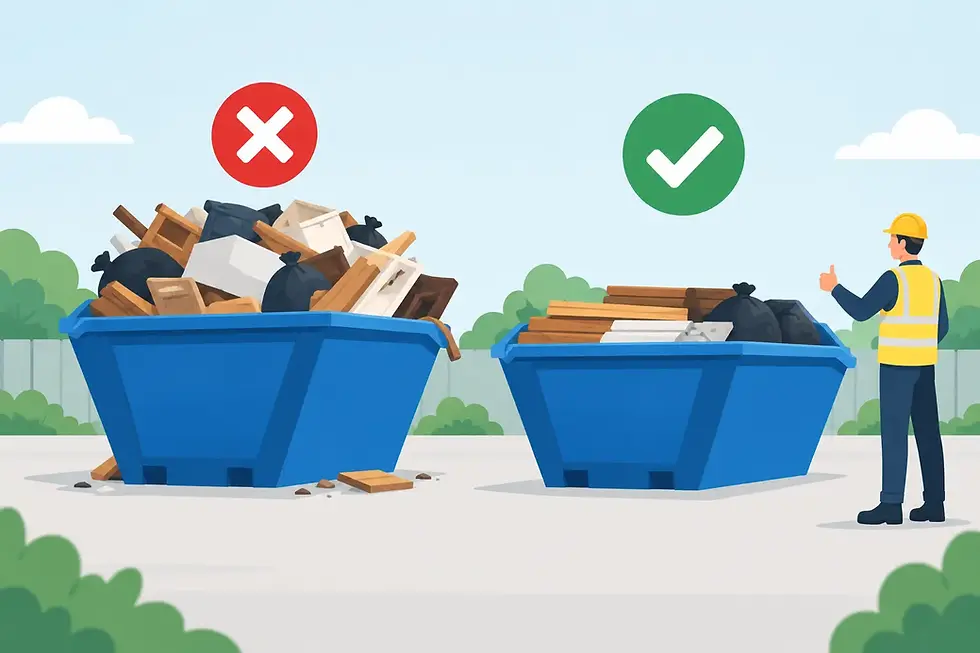
It depends on how efficiently the carpet is prepared. Neatly folded or cut lengths sit far better than springy rolls thrown in at random. Never pile waste above the sides of the skip. Overfilled skips cannot be transported safely, which can delay collection and mean waste has to be removed before the lorry can take it away.
Skips of Manchester offers sizes from 2 to 12 yards, so customers can match the container to the job rather than paying for unnecessary space. If you are between sizes, consider the wider project and how much other waste is likely to appear once the room is emptied. It is usually better to allow a little headroom than to arrange another disposal run halfway through the work.
Think about access and permits before delivery
A skip needs a safe, accessible place for delivery and collection. A private drive is usually the easiest option, provided there is enough width and no low branches, cables or parked vehicles blocking access. Let the supplier know about awkward entrances, tight streets or access through a shared yard when booking.
If the skip must sit on a public road, a permit may be required from the local council. Requirements and timings vary across Greater Manchester, and a permit is not something to leave until delivery day. Your waste provider can advise on the process and whether road placement is suitable, but avoid placing a skip on the highway without the necessary permission.
Keep the loading area clear and let neighbours know if access or parking may be affected. For active building work, position the skip close enough to save carrying time without blocking trades, emergency access or the route to the front door.
What should not go in with old carpet?
Most ordinary carpet, underlay and general renovation waste can be handled as mixed non-hazardous waste, but some items need separate arrangements. Do not put the following in a general skip unless your provider has specifically confirmed otherwise:
Paint tins containing wet paint, solvents, fuels or other chemicals
Gas bottles, batteries, electrical items or fluorescent tubes
Asbestos-containing materials, including suspicious old floor tiles or insulation
Plasterboard, tyres, fridges, freezers or mattresses where separate disposal rules apply
If you are unsure about an item found beneath the flooring, stop and ask before loading it. This is especially important in older properties, where adhesive, tiles or insulation may not be what they first appear to be. A quick check can prevent a rejected load, extra charges or a safety problem.
Make disposal the easy part of the project
Book your waste solution before you start lifting carpet, rather than leaving rolls stacked in the hall or garden. Cut the material down as you work, keep sharp fittings contained and load heavier, flatter waste first. That approach keeps the space safer and helps you use every bit of the capacity you have paid for.
Responsible disposal does not need to mean endless trips or guesswork. With the right size container, clear access and a realistic view of the waste involved, you can get the old flooring out of the way and focus on making the room feel new again.


Comments