


What Waste Is Prohibited From a Manchester Skip?
A skip full of renovation rubble, old cupboards and garden cuttings is straightforward. The difficulty starts when a customer adds something that cannot safely go through ordinary waste processing. If you are asking what waste is prohibited from a skip, checking before delivery can prevent a refused collection, extra charges and a frustrating delay to your project.
Most household and building waste can go into a hired skip. However, certain materials are hazardous, require specialist treatment or need to be kept separate for recycling. The exact rules can vary by waste facility and the item involved, so if there is any doubt, ask before loading it.
What waste is prohibited from a skip?
The items below are commonly prohibited from mixed-waste skips. They are not excluded to make life difficult. They need different handling to protect people, vehicles, sorting teams and the environment.
Asbestos and asbestos-containing materials, including some old garage roofs, insulation boards, pipe lagging and textured coatings
Paint, varnish, solvents, adhesives, resins and other liquid chemicals
Petrol, diesel, engine oil, cooking oil, fuel containers and oily rags
Gas bottles, fire extinguishers and pressurised canisters
Batteries, including car batteries, lithium batteries and rechargeable tool batteries
Electrical items, such as televisions, computers, microwaves, fridges, freezers and other appliances
Tyres
Clinical, medical or sanitary waste, including needles, medicines and sharps
Fluorescent tubes, light bulbs and items containing mercury
Explosives, fireworks, ammunition and flares
Some waste is clearly hazardous. Other items may look harmless but can create a real risk when compacted or processed. A lithium battery, for example, can cause a fire if damaged in a skip or at a recycling facility. A gas bottle can remain pressurised even when it appears empty.
Why prohibited waste cannot go in a mixed skip
Once collected, skip contents are taken to a licensed waste facility and separated into materials such as wood, metal, rubble, cardboard and plastics. Skips of Manchester aims to recycle more than 97% of collected waste, but that depends on waste arriving in a condition that can be handled safely and sorted correctly.
Hazardous liquids can leak through a skip and contaminate other materials. Asbestos fibres require tightly controlled removal and disposal. Electrical goods contain components that must be recovered or treated through approved routes. The issue is not simply whether an item fits in the skip - it is what happens to it afterwards.
If prohibited waste is found during collection or sorting, the skip may be left in place until the item is removed. In other cases, the load may need specialist disposal, which can lead to additional costs. A quick check before you load is always the easier option.
Items that depend on how they are handled
Not every restricted item is an automatic no. Some materials are accepted only when they are declared in advance, kept separate or placed in a dedicated container. Plasterboard is a common example. It should not be mixed with general waste because it needs separate treatment, but a suitable disposal arrangement may be available if you let your skip provider know first.
Soil and hardcore also need a little thought. Clean soil, bricks, concrete and rubble are often suitable for an inert-waste skip, but mixed loads containing timber, plastic, turf, insulation or general rubbish may need a different option. Choosing the right skip type helps keep disposal costs fair and supports better recycling.
Mattresses, upholstered seating and some bulky household items may also be subject to separate charges or processing requirements. The rules can change depending on the item’s construction and local facility arrangements. Mention these items when booking rather than waiting until the skip arrives.
What you can usually put in a skip
For most home clearances, DIY jobs and building work, a skip is ideal for ordinary non-hazardous waste. This can include timber, old kitchen units, doors, furniture, cardboard, packaging, tiles, bricks, concrete, rubble, garden cuttings and non-electrical fittings.
A mixed-waste skip works well when you are clearing a room, replacing a bathroom or tackling a garden project with a range of materials. A smaller 2-yard or 4-yard skip can suit a focused household job, while larger sizes are often better for renovations and trade work. The right size depends on volume, but it is usually better to allow a little room than try to overfill a smaller skip.
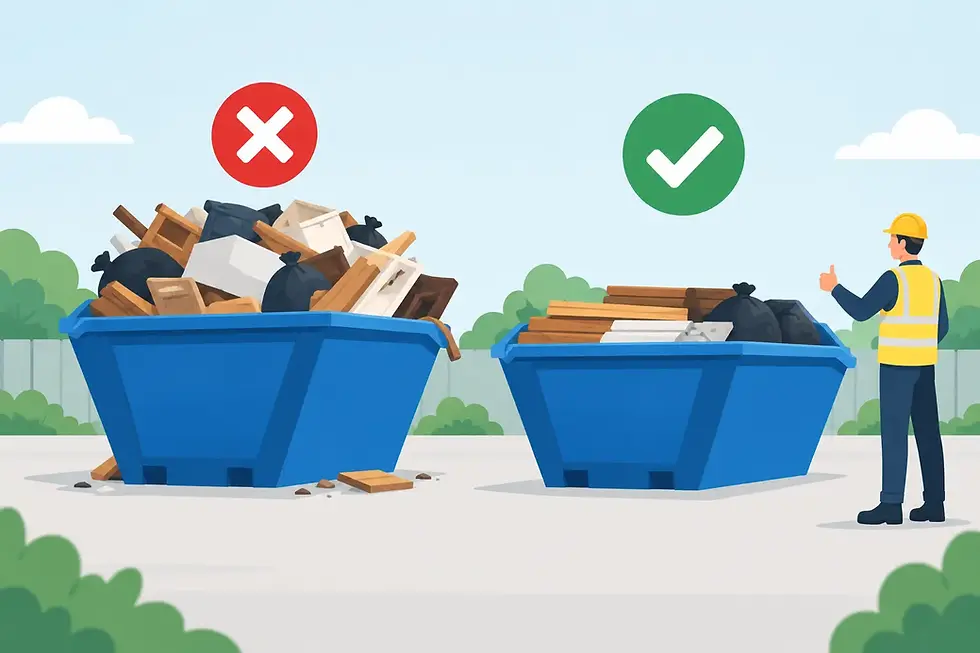
Do not fill above the top edge of the skip. Loads need to be safe for transport on the lorry, and overfilled skips may not be collected until excess waste has been removed.
How to deal with prohibited waste safely
For paint, chemicals and oils, keep products in their original containers where possible and use an approved household waste recycling centre or specialist collection service. Never pour liquids into drains, onto soil or into the skip. Even water-based paint can cause problems when mixed with other waste.
Take batteries, electrical goods and fluorescent tubes to an appropriate recycling point. Many retailers and recycling centres provide dedicated collection points for batteries and small electricals. For large appliances, check whether a separate collection or approved disposal service is available.
Gas bottles are often returnable to the supplier or brand that supplied them. Do not place them in any skip, even if you believe they are empty. For fire extinguishers, asbestos, medical waste or chemicals from a trade site, arrange a specialist waste contractor. These materials need documented, compliant disposal rather than general collection.
If you uncover suspected asbestos during a clearance, stop work around the material. Avoid breaking it up, drilling it or sweeping dust. Professional advice is the safest next step, particularly with old outbuildings, ceiling panels, pipe insulation and roofing sheets.
Check before you book, not when the skip arrives
The most useful information to share when booking is what the waste is, roughly how much there is and whether it contains anything unusual. A photograph can help if you are unsure about a particular item. This is particularly worthwhile on refurbishment sites, where a load may include items left by previous occupants.
Be clear if the skip will be on a road rather than private land, too. A permit may be required, and arranging this in advance keeps your project moving. Your provider can advise on the best skip size, suitable placement and any materials that need a separate solution.
For tradespeople, setting aside a small area for batteries, paint tins, sealants, electrical waste and gas canisters can save time later. It stops restricted items being thrown into the skip by mistake and makes site waste easier to manage.
A simple rule for a hassle-free collection
If an item contains a chemical, a liquid, a battery, a gas cylinder, electrical components or a material you cannot identify, do not put it in the skip until you have checked. The same applies to anything labelled hazardous, flammable, corrosive or toxic.
A skip should make clearing your property or site simpler, not create another job at collection time. Sort out restricted materials first, then load your general waste safely and evenly. If you are planning a clear-out, renovation or building job in Manchester, a quick conversation before booking will help ensure the skip you choose is right for the waste you need to remove.


Comments