


How to Avoid Overloaded Skips and Extra Charges
A skip can look as though it has plenty of room left, then one last wardrobe, bag of rubble or bundle of timber turns it into a collection problem. Knowing how to avoid overloaded skips saves time, protects people on site and helps you avoid unexpected charges or a delayed collection.
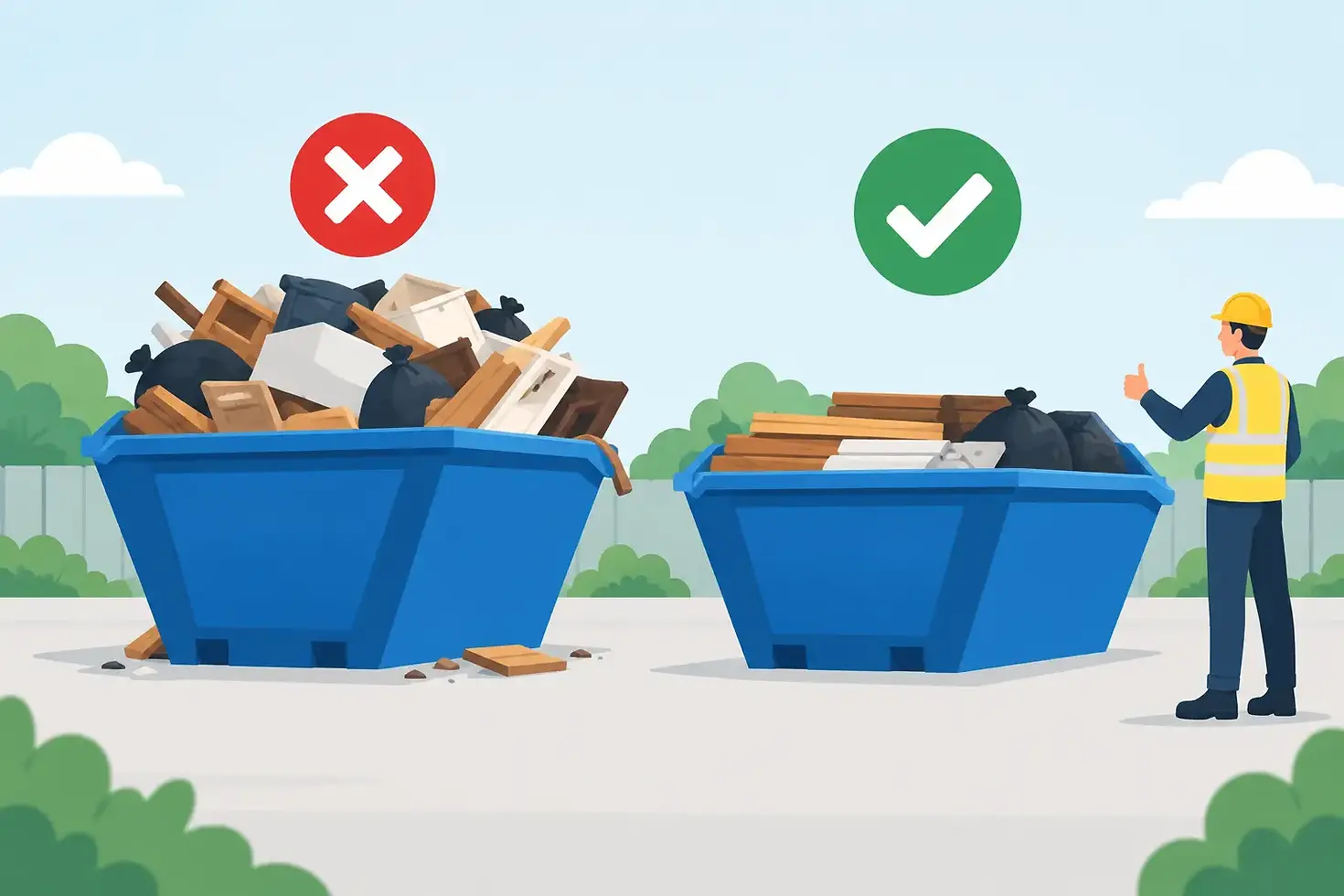
The simple rule is that waste must sit below the top edge of the skip. That gives the collection lorry a safe, secure load to transport on Manchester roads. It is not just a box-ticking exercise: items piled above the rim can shift, fall or prevent the skip from being sheeted safely.
What counts as an overloaded skip?
A skip is overloaded when its contents rise above the fill line or top rim, even if the excess is only on one side. Loose waste, such as cardboard, insulation, garden cuttings and plastic packaging, can be particularly deceptive. It may look light, but it can blow away or move during transport.
Long items create a separate issue. Timber, pipes and branches that stick out of the skip can make collection unsafe, even when the overall amount of waste seems modest. If these materials can be cut down and placed fully inside, that is usually the best approach. Do not rest items across the top as a makeshift lid.
A driver may not be able to collect an overloaded skip until the excess has been removed. Depending on the situation, this could mean a return visit or additional costs. Planning for the fill line from the start is much easier than trying to reorganise a full skip on collection day.
Choose a skip size with room to spare
The most reliable way to avoid an overloaded skip is to allow for more capacity than your first estimate. People often calculate waste by the number of rooms being cleared, then forget about bulky furniture, old flooring, packaging and the awkward gaps between items.
For a small clear-out, a 2-yard skip or 1-ton skip bag may be enough. A 4-yard or 6-yard skip is often a practical choice for kitchen and bathroom work, moderate garden projects and household waste. For larger renovations, substantial clearances or active building work, an 8-yard or 12-yard skip may be the better fit.
There is a trade-off. Booking too large a skip can mean paying for unused space, while booking too small often leads to a second skip, a waste run or an overfilled load. If you are deciding between two sizes, think about the bulkiest items first. A sofa, doors, kitchen units and sheet materials occupy more space than a pile of bagged waste suggests.
It also helps to separate volume from weight. Soil, hardcore, bricks and tiles can be compact in volume but very heavy. A skip suited to mixed household rubbish may not be right for a dense load of inert materials. Tell your skip provider what you are disposing of when booking, especially if most of the load will be rubble or soil.
Plan the job before the skip arrives
A little preparation stops the skip becoming a last-minute dumping point. Before delivery, make a rough list of everything that is likely to go in. Include waste from every part of the project, not only the obvious items. A bathroom refurbishment, for example, may produce old fittings, tiles, plasterboard, timber, packaging and offcuts.
Where possible, keep reusable or recyclable items out of the skip. Furniture in good condition may be suitable for donation. Clean cardboard, metal and certain electrical items may have separate recycling routes. This reduces the amount you need to fit in the skip and supports better waste handling.
For construction and trade jobs, agree who is responsible for loading. A shared skip can fill quickly when several trades are working at once. A simple conversation about what is allowed in the skip, where materials should be broken down and when the collection is due prevents one person leaving a pile above the rim for someone else to solve.
If the skip is on a driveway, keep it accessible and avoid leaving a growing pile of waste beside it. If it is placed on the road with a permit, keeping the load contained is even more important. The space around the skip needs to remain safe for pedestrians, neighbours and the collection team.
Load a skip properly to use the full capacity
Good loading is not about forcing every possible item inside. It is about using the available space sensibly while keeping the load level and secure.
Start with flat, heavy or dense materials at the bottom. Bricks, broken slabs and tiles should be spread evenly rather than dropped into one corner. Place long items lengthways where they fit, and break down cardboard boxes, cabinets and timber offcuts before loading them.
Then use smaller materials to fill natural gaps. Bagged light waste can sit above heavier items, but do not build a high mound in the middle. Aim for an even, level load that stays below the rim all the way around.
Avoid putting one large, awkward item in first if it will create empty space below or around it. An old wardrobe or mattress can take up a surprising amount of room. If such items are going in, load them with a plan and keep other waste organised around them. For very bulky items, ask for advice before booking so you can choose the most suitable capacity.
Keep unsuitable materials out
Some waste should not go into a standard mixed-waste skip. These restrictions protect collection staff, recycling facilities and the environment. They can also create extra handling costs if prohibited items are found in the load.
Common items to keep out include:
Gas bottles, fire extinguishers and pressurised containers
Paint, solvents, oils, fuel and other chemicals
Asbestos and materials suspected of containing asbestos
Tyres, batteries and electrical equipment
Fridges, freezers and other appliances containing gases
Plasterboard may also need separate handling, so check before adding it to a mixed skip. The right arrangement depends on the material and the amount involved. If you are uncertain about an item, ask before it goes in rather than hoping it will be accepted at collection.
Leave collection day clear and manageable
Overloading sometimes happens because a project runs longer than expected. The decorators finish late, the garden clearance grows, or the final room is emptied on the morning the lorry is due. Try to finish loading the day before collection, giving yourself time to level the waste and remove anything above the rim.
Walk around the skip rather than judging it from one angle. Check that nothing protrudes, no bags are balanced on top and no loose material is likely to blow out. Make sure vehicles, gates and stacked materials are not blocking access for the collection lorry.
If you know the skip will not be enough, contact the provider before collection. An exchange or an additional skip is usually safer and more straightforward than trying to cram the remaining waste into the existing one. Skips of Manchester can help customers match the right skip size to the job, whether it is a one-off household clear-out or a busy trade project.
How to avoid overloaded skips when plans change
Projects rarely produce exactly the waste you expected. The key is to act early. As the skip reaches around three-quarters full, pause and assess what is still to come. If several bulky items remain, do not wait until the rim has disappeared beneath bags and offcuts.
You may be able to reduce volume by breaking down suitable items, setting reusable materials aside or arranging a second collection. What you should not do is pile waste above the sides, cover it with a sheet yourself or place heavy items on top in the hope they will hold everything down. A collection lorry must transport the load safely, not merely move it a short distance.
A well-filled skip is useful. A level, contained skip is collectable. Leave a little breathing room, load with care and ask for guidance when the job changes. That small amount of planning keeps your project moving and your waste disposal simple.


Comments