


How to Choose Skip Capacity for Your Project
A skip that is too small can turn a straightforward clear-out into a rushed second booking. One that is far too large can mean paying for empty space. Knowing how to choose skip capacity comes down to the type of waste, how quickly it will build up and how much room you have for delivery.
For a garden tidy in Chorlton, a kitchen refit in Stockport or a busy site in central Manchester, the right size keeps the job moving and helps you avoid repeated trips to the recycling centre. The aim is not to guess perfectly. It is to allow enough space for the waste you are realistically going to create.
Start with the waste, not the size
Before looking at skip sizes, take a quick look at what you are throwing away. A pile of broken-up concrete takes up far less room than an equivalent pile of old wardrobes, packaging and kitchen units. Heavy materials and bulky materials can need very different approaches, even when they appear to fill the same area.
A house clearance usually creates mixed, bulky waste: furniture, bags, toys, cupboards, carpets and general household items. Renovation work often creates a mixture of timber, plasterboard, old fittings, tiles and packaging. Garden projects may include branches, turf, soil, fencing and sheds. On trade jobs, waste can build up quickly as each stage of work is completed.
It is also worth separating out materials that may need special handling. Items such as paint, gas bottles, tyres, electrical goods, batteries and hazardous waste should never be assumed suitable for a general skip. Check this before booking, particularly if they are likely to make up a noticeable part of your load.
How to choose skip capacity by project type
The easiest starting point is to match the skip to the scale of the job. Skips of Manchester offers sizes from compact 2-yard skips through to 12-yard options, as well as 1-ton skip bags for smaller amounts of waste.
Small clear-outs, DIY and garden jobs
A 2-yard skip is a sensible choice when you are clearing a shed, sorting a small room, removing a limited amount of garden waste or completing a minor DIY task. It is compact, which can make it useful where driveway space is tight.
A 1-ton skip bag can also work well for lighter, smaller jobs where you do not need a full skip on site. It is a practical option for gradually collected household or garden waste, but capacity still matters. If the project is likely to produce bulky furniture or a large volume of branches, a skip can be the better value choice.
Bathroom and kitchen renovations
For a bathroom refurbishment, a 4-yard skip is often a useful middle ground. It can accommodate old sanitaryware, tiles, cabinets, flooring, packaging and general renovation waste, without taking up the footprint of a larger container.
Kitchen replacements can create more volume than people expect. Old units, worktops, appliances awaiting separate disposal, cardboard and protective wrapping soon add up. A 6-yard skip is often a more comfortable fit for a typical kitchen project, especially if other rooms are being cleared at the same time.
Larger house clearances and renovations
A 6-yard skip is a popular all-round option for substantial DIY projects, room-by-room clearances and medium-sized renovations. It provides useful capacity without being excessive for many domestic driveways.
For a full house clearance, extensive renovation or a project involving bulky furniture and fittings, consider moving up to an 8-yard skip. The extra room is valuable when waste cannot be broken down easily. Flat-packed cardboard is one thing; sofas, mattresses and cupboards are another.
If you are clearing a property after a move, tenancy change or bereavement, it is usually safer to allow for more capacity. Items often appear once cupboards, loft spaces, garages and sheds are emptied. Booking too close to your estimated volume can create pressure on the final day.
Trade, construction and major projects
An 8-yard skip suits many active building and landscaping jobs where waste is produced steadily but the site still needs to stay organised. It can be a strong choice for larger rip-outs, joinery work, landscaping waste and multi-room refurbishments.
For bigger commercial clearances, major renovations and construction projects, a 12-yard skip offers the volume needed for lighter, bulky waste. Think timber offcuts, insulation, packaging, old shop fittings, furniture and general site waste. If your work involves dense materials such as soil, rubble or hardcore, speak to the provider first. Weight limits and loading rules may mean a smaller skip or separate arrangement is more suitable.
Allow for bulky waste and hidden volume
Most under-sized skip bookings happen because customers estimate by weight rather than volume. A few heavy paving slabs may not fill much room, while a dismantled wardrobe, carpet rolls and bags of loft insulation can fill a skip surprisingly fast.
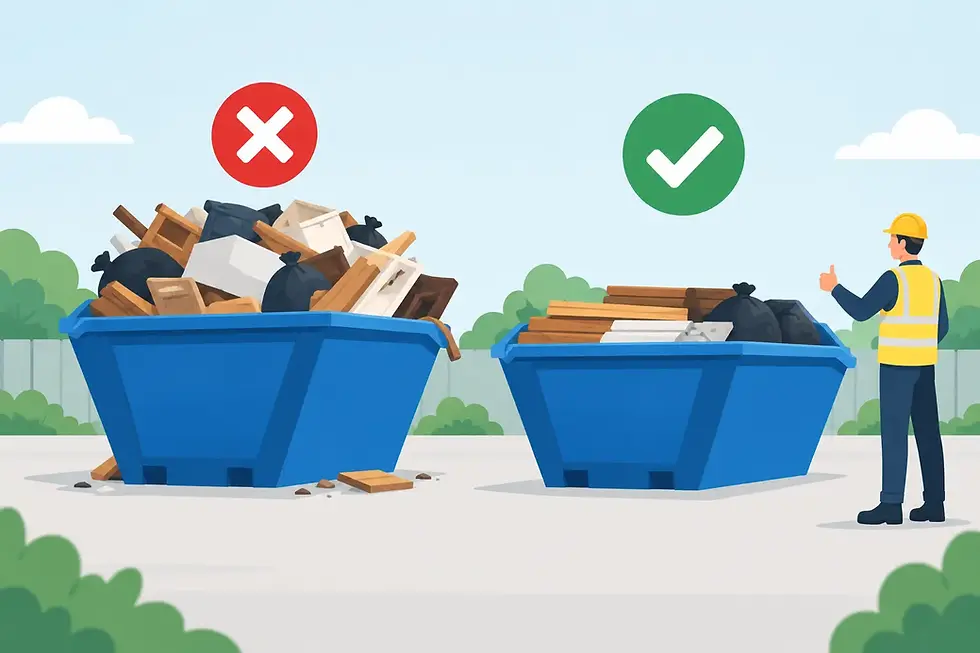
Where possible, break down furniture, flatten cardboard and stack timber carefully. This does not mean forcing waste into every gap. It means loading sensibly so you make full use of the capacity you have paid for. Never fill a skip above its sides. Waste sticking out can make transport unsafe and may prevent collection until it is sorted.
If you are between two sizes, ask yourself one useful question: will more waste appear once the job starts? For most clearances and refurbishment work, the answer is yes. Choosing the next size up can cost less than arranging an additional collection or second skip later.
Think about access before you book
Capacity is only one part of choosing the right skip. The skip also needs a suitable place to go. Measure the available driveway or private land, checking for parked cars, low branches, gates, overhead cables and narrow access. Let the supplier know if access is awkward so delivery can be planned properly.
If the skip needs to sit on a public road, you may need a permit from the local council. Permit arrangements take time, so do not leave this until the day before your project begins. You may also need to consider whether the location needs lights, cones or other safety measures.
For sites with restricted access, a smaller skip with more frequent collections can sometimes be more practical than one large skip. This is especially true for busy trades, shared driveways and locations where space needs to remain clear for customers, residents or deliveries.
Avoid paying for the wrong capacity
The cheapest advertised skip is not always the cheapest solution. A low price on a skip that cannot hold the waste can lead to another booking, extra disruption and more time spent managing the job. Equally, there is no reason to pay for a 12-yard skip when a 4-yard option comfortably covers a small bathroom refit.
Be clear about the project, the likely materials and the collection timing when requesting a price. Visible pricing makes comparisons easier, but compare like for like: skip size, hire period, delivery and collection, permit support and any limits on waste types all affect the true cost.
Responsible disposal should also be part of the decision. Skips of Manchester recycles more than 97% of collected waste, helping homeowners and businesses keep as much material as possible out of landfill while getting the waste off site efficiently.
A quick final check before booking
Take photographs of the waste pile or project area, then estimate whether it is likely to double once cupboards, underlay, packaging or garden cuttings are included. Check where the skip will be placed and whether a permit may be needed. Finally, choose the size that gives you a little breathing room without paying for capacity you will not use.
A quick conversation before booking can save a great deal of hassle later. If you are unsure between two sizes, describe the job honestly and get practical advice - the right skip should make the waste the easy part of your project.


Comments