


Skip Hire Versus Waste Collection: Which Fits?
A bathroom refit can leave you with broken tiles, plasterboard, old units and packaging before you have had time to choose a new shower. That is when the choice between skip hire versus waste collection matters. Both services take the hard work out of getting rid of rubbish, but they suit very different jobs, timelines and types of waste.
For many Manchester households and trades, the best option comes down to one question: do you need somewhere to put waste as the job progresses, or do you already have it piled up and ready to go? Understanding that difference can save repeat trips to the tip, prevent an undersized booking and keep a project moving.
Skip hire versus waste collection: the main difference
Skip hire gives you a container for a set period. It is delivered to your drive, private land or, with the right permit, the roadside. You fill it at your own pace and arrange collection when the work is complete. It is designed for projects that create waste over several days, such as renovations, landscaping, house clearances and building work.
Waste collection is usually a one-off removal service. A team arrives, loads the rubbish and takes it away, often on the same day or at an agreed time. This can be ideal when the waste is already sorted and accessible, particularly if you have only a few bulky items or cannot keep a skip outside.
Neither is automatically better. A skip gives you flexibility while the work is under way. Collection can be quicker and more practical for a finished pile of waste. The right choice is the one that matches the amount of rubbish, where it is located and how long you need to dispose of it.
When hiring a skip makes more sense
A skip is normally the most practical choice when waste will build up steadily. If you are stripping a kitchen, clearing a garden over a weekend or managing an active building site, having a skip nearby keeps materials out of the way and reduces the temptation to create unsafe piles around the property.
It also helps where the volume is difficult to predict. A loft clearance may start with old boxes and furniture, then reveal carpets, timber, broken shelving and bags of unwanted belongings. Booking a suitable skip gives you room for the surprises that tend to appear once a job begins.
For domestic projects, a compact 2-yard skip can work well for small clearances and garden tidy-ups. Mid-sized skips are popular for DIY and renovation work, while larger options up to 12 yards are better suited to substantial clearances, construction waste and commercial jobs. If a full skip feels excessive, a 1-ton skip bag can offer a useful middle ground for smaller projects where collection is not urgent.
There is also a practical cost benefit. A skip price is usually based on its size and hire period, rather than every individual item loaded into it. That can make budgeting simpler when you are dealing with mixed, non-hazardous waste in meaningful quantities.
Think about access before you book
The best skip in the world is no help if the delivery lorry cannot safely reach the location. Check the width and height of access routes, including low branches, parked cars and overhead cables. Let the provider know if access is tight, as this gives them the best chance of arranging a smooth delivery.
You should also choose a stable, level spot. A driveway is often ideal, but placing a skip on the road may require a council permit. Permit rules and timings vary, so it is worth sorting this out before the delivery date rather than discovering the issue on the morning your skip is due to arrive.
When waste collection is the better option
Waste collection is often a better fit when the job is finished and everything is ready in one place. Perhaps you have replaced a sofa, emptied a storage unit, cleared a tenancy or inherited a shed full of unwanted items. If there is no need to hold waste for several days, a collection can be a straightforward answer.
It can also suit properties with limited space. Flats, terraced homes without a drive and busy streets are not always suitable for a skip, especially if a permit is difficult to arrange. A collection avoids leaving a container outside and can be useful where neighbours, parking or site access make skip placement awkward.
The key detail is labour. With many collection services, the removal team loads the items for you. That is helpful for heavy furniture and awkward bulky waste, but the price may reflect the number of items, their weight, how far they need to be carried and whether they are easy to access. A pile by the gate is very different from several wardrobes on a third-floor landing.
If you are comparing quotes, make sure you are comparing like for like. Ask whether loading, travel, labour, disposal and any extra charges are included. A low headline figure can look less attractive once the job involves stairs, parking restrictions or a larger volume than expected.
Cost, convenience and control
Cost should not be the only factor, but it should be clear from the start. Skip hire tends to offer better value for larger, mixed loads where you are happy to do the loading yourself. It gives you control over the pace of the project, and you can fill the space as rooms are cleared or trades complete different stages of work.
Waste collection can be more economical for a small amount of rubbish that is ready to remove immediately. It also saves you the physical effort of loading, which is valuable if you have bulky items, limited mobility or simply want the task dealt with in one visit.
Be realistic about volume. Underestimating can mean hiring a second skip or arranging another collection. Overestimating means paying for empty space. A good rule is to consider not only what you can see now, but also packaging, hidden materials and the items you are likely to uncover during the job.
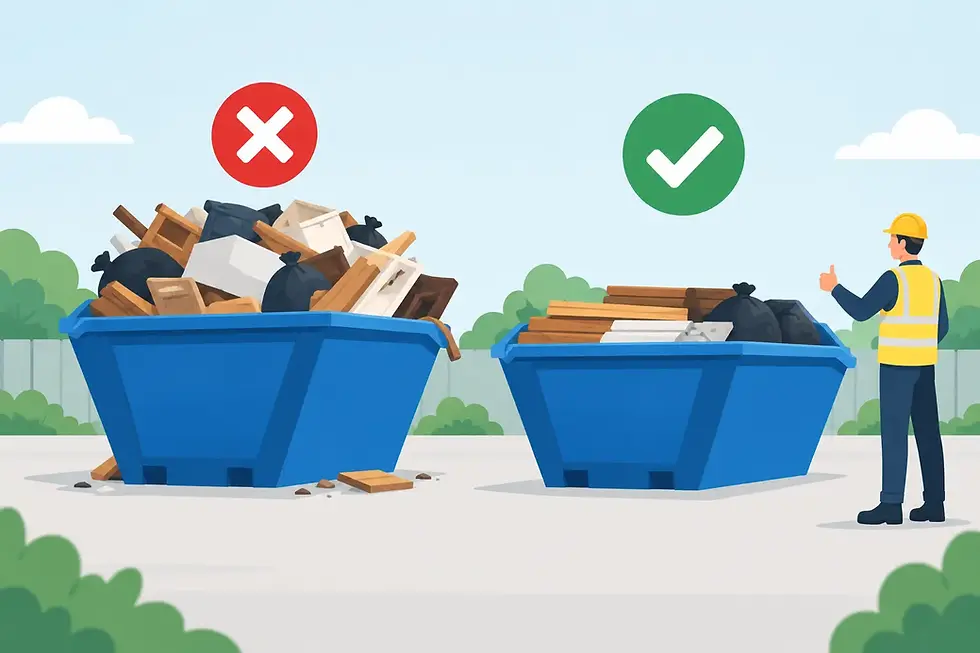
Do not overfill a skip. Waste must stay below the fill line so it can be transported safely. Items sticking out create a safety risk and may mean the collection cannot go ahead until the load is levelled.
What can go in a skip or collection load?
General household waste, timber, soil, green waste, bricks, furniture, cardboard and non-electrical fittings are commonly accepted, although the exact rules depend on the service and waste type. Separating materials where possible can make disposal easier and supports higher recycling rates.
Some items need separate arrangements. Hazardous materials, asbestos, gas bottles, chemicals, tyres, paint, batteries, fridges and certain electrical items may be restricted or prohibited. Never assume an item is acceptable simply because it fits. Checking first protects you from refused collection, unexpected charges and unsafe disposal.
This matters environmentally as well as legally. Responsible waste handling means more than getting it off your property. It means sending suitable materials for recycling and making sure specialist waste goes through the right route. Skips of Manchester recycles more than 97% of collected waste, helping customers clear space without treating landfill as the default answer.
Choosing the right service for your job
If you are working over several days, expect a large or unpredictable amount of mixed waste, and have suitable space, skip hire is usually the sensible route. It keeps the site organised and gives you a single place for rubbish from start to finish.
If your waste is already bagged, stacked or ready by the door, and you want it gone without a container sitting outside, collection may be more convenient. It is particularly useful for bulky household items, end-of-tenancy clearances and properties with no practical space for a skip.
For trade customers, the decision often changes from site to site. A builder on a multi-day renovation may need a skip available throughout. A maintenance contractor completing a one-day job may prefer collection once the work is signed off. Matching the service to the working pattern avoids paying for time or capacity you do not need.
Before booking, take a few photos of the waste, estimate the number of bin bags or bulky items, and consider the access at your property. That small amount of preparation makes it easier to choose the right capacity, arrange any permit and receive an accurate price.
The simplest waste solution is the one that lets you get on with the job. Whether that means a skip waiting on the drive or a collection booked for a ready-made pile, choosing early keeps your project cleaner, safer and far less stressful.


Comments