


Midi Skip Versus Large Skip - Which Fits?
A midi skip versus large skip decision usually comes down to one question: are you clearing a room, or changing a property? Choosing too small can mean arranging a second collection halfway through the job. Choosing far too large can leave you paying for space you never use. The right answer is based on your waste, the room outside your property and how quickly the project will build up.
Skip names can vary between suppliers, so it is always worth checking the stated cubic-yard capacity before booking. In most cases, a midi skip is around 4 cubic yards, while a large skip is often around 8 cubic yards. That makes a large skip roughly twice the capacity of a midi - but it also takes up more driveway, kerbside or site space.
What is a midi skip?
A midi skip is a practical middle-sized option, commonly supplied as a 4-yard skip. It is a popular choice for homeowners because it handles far more than a mini skip without becoming difficult to place on a standard driveway.
It works well for projects that create a steady amount of mixed waste rather than a full-property volume. Think bathroom refits, smaller kitchen updates, clearing a couple of rooms, a shed clear-out or a substantial garden tidy. It is also a sensible option for tradespeople completing short jobs where waste needs to be kept contained and collected promptly.
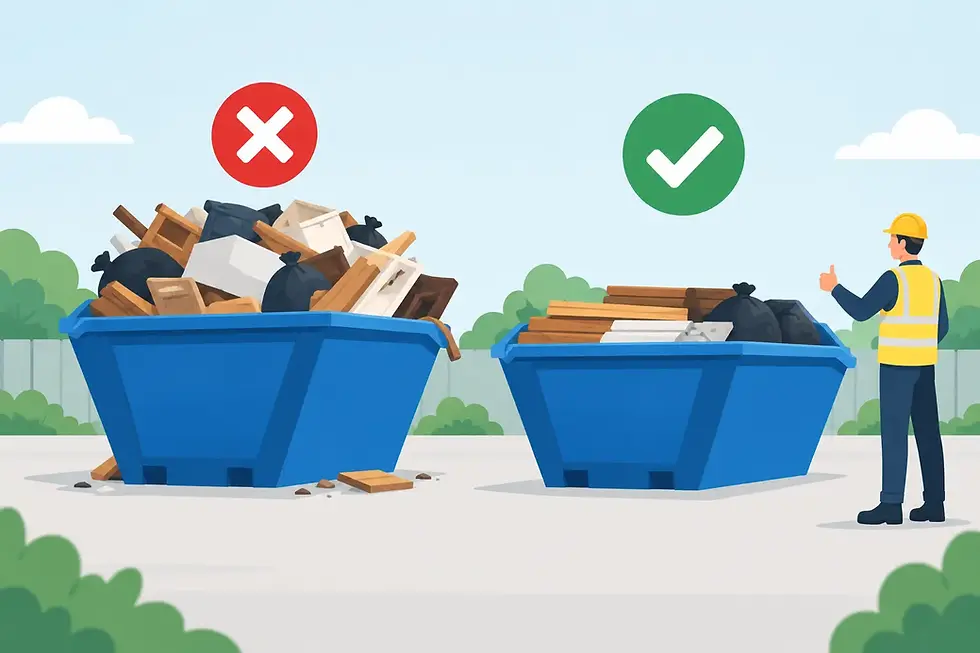
A midi skip can take items such as old cupboards, timber, carpets, garden waste, cardboard, packaging, soil and general household rubbish, provided the materials are permitted. The key is to load it evenly and keep everything below the top edge. Overfilled skips are unsafe to transport on the lorry and may need waste removing before collection.
When a midi skip is the better fit
A midi skip is often the right call when access is restricted. If you have a narrow driveway, limited parking or a small front garden, a compact unit can make delivery and collection much simpler. It can also be the more proportionate option for jobs with a clear end point, such as replacing a bathroom suite or clearing a tenant's belongings from one or two rooms.
It is worth being realistic about bulky items. A few large wardrobes, a sofa, old appliances and several bags of rubbish can fill a 4-yard skip quicker than expected. Breaking down furniture where safe to do so can help you use the space efficiently, but it cannot turn a midi skip into a large one.
Midi skip versus large skip: the capacity difference
A large skip, commonly an 8-yard skip, is built for bigger clearances, heavier renovation waste volumes and ongoing work. It gives you much more room for bulky materials and reduces the risk of running out of capacity just as the project gathers pace.
For a house clearance, a kitchen rip-out, a sizeable landscaping job or a renovation involving several rooms, the additional capacity can be a real advantage. Rather than stacking waste around the garden or making repeated trips to the recycling centre, you can keep the site tidier and focus on the work.
That said, a large skip is not automatically the best value. If your waste would only fill half of it, a midi skip may be the more economical choice. The best-value skip is the one that holds the waste you genuinely expect to produce, with a little room for the unexpected.
Size descriptions are useful starting points, not a substitute for checking measurements. The exact length, width and height can differ by skip type and supplier. Before booking, measure the available space on your drive and consider gates, low branches, parked cars and turning room for the delivery lorry.
Projects that usually suit a large skip
Large skips are particularly useful where waste is bulky, mixed or generated over several days. Common examples include:
Full or partial house clearances, especially where furniture is involved
Kitchen and renovation projects with units, worktops, plasterboard and timber
Landscaping work with turf, branches, paving and garden clearance waste
Shop, office or rental-property clear-outs
Building and maintenance jobs that need one dependable waste point on site
If your project includes a great deal of soil, rubble, concrete or other dense material, do not assume a large skip is suitable simply because it has more space. Heavy inert waste can create weight limits and loading restrictions. Ask for advice before booking so the correct skip type can be arranged.
Cost, convenience and avoiding a second skip
The upfront hire price matters, but it should not be the only factor. A midi skip will usually cost less than a large skip, making it attractive for contained jobs. However, if it fills before you have finished, the total cost and disruption of arranging another skip may outweigh the saving.
A large skip can be better value for a project with uncertain waste volumes. Renovations are a good example. Once flooring comes up, cupboards come out or old plaster is stripped back, there is often more material than expected. If you are already close to the limit of a midi skip on paper, moving up a size can give useful breathing space.
On the other hand, hiring an oversized skip just to avoid making a decision is rarely necessary. A clear list of what is being thrown away will usually point you in the right direction. Count the bulky pieces, think about bagged waste, and allow for offcuts, packaging and the items you find once you start clearing.
At Skips of Manchester, customers can choose from a range of skip sizes and get straightforward guidance before booking. That means you can match the skip to the job rather than guess and hope for the best.
Access and permits in Manchester
Where the skip will sit is just as important as what will go in it. A skip placed fully on private land, such as a driveway, normally avoids the need for a highway permit. If it needs to be placed on the road, you may need a permit from the local authority before delivery.
A larger skip takes up more kerbside space, so planning is especially important on busy residential streets. Consider whether neighbours need access, whether there are parking restrictions, and whether the delivery vehicle can safely position the skip. Permits can take time to arrange, so do not leave this until the day before your work starts.
If you are unsure, provide as much information as possible when booking. A quick explanation of the location, access and expected waste can prevent delays and help ensure the right skip arrives first time.
What you can put in either skip
Most household, garden and building waste can go into a skip, but some items need separate disposal because of safety or environmental rules. Hazardous materials, including asbestos, paint, gas bottles, tyres, batteries, chemicals and electrical items, should not be placed in a general skip unless specifically agreed.
The same applies to certain bulky or specialist materials. If you are clearing a garage, shed or commercial unit, check before loading anything you are not certain about. This protects the collection team, avoids extra charges and supports responsible recycling.
A reputable skip provider sorts and processes collected waste wherever possible. Choosing the correct size also helps this process: waste stays contained, transport is safer and fewer unnecessary journeys are needed.
A simple way to choose the right size
Start by looking at the largest items, not just the number of bin bags. Old furniture, kitchen units and timber take up air space quickly, while rubble and soil add weight fast. Next, consider whether the work is a one-day clearance or an ongoing project. Finally, check the placement area and whether a road permit could be required.
Choose a midi skip when the job is focused, access is tight and the waste is likely to come from a small clearance, one room or a modest renovation. Choose a large skip when you are clearing several rooms, handling bulky furniture, working on a larger refurb or want space for the waste that projects nearly always reveal.
If you are between sizes, do not wait until the waste is piled up outside. A short conversation before delivery can save a second booking, an avoidable delay and a lot of lifting. Book the skip that gives your Manchester project enough room to stay safe, tidy and moving forward.


Comments