


Manchester Skip Alternatives for Every Job
A full garage, a ripped-out kitchen or a weekend garden clearance can create more waste than most people expect. While a skip is often the easiest answer, there are several Manchester skip alternatives worth considering when access is tight, the job is small or you need waste gone quickly. The right choice comes down to how much rubbish you have, what it is made of, where it is sitting and how much of your own time you can spare.
When a skip is not the obvious answer
Hiring a skip gives you a secure place to load waste as your project progresses. It is particularly useful for renovation work, house clearances, landscaping and active building jobs where rubbish builds up over several days. But it is not the only option, and it will not suit every property.
A narrow terraced street, no off-road space, a one-off bulky item or a very small amount of waste can all make an alternative more practical. Before booking anything, estimate the volume honestly. A few black bags, some cardboard and an old chair are different from plasterboard, timber, soil and broken bathroom fittings.
It also pays to separate materials where possible. Clean cardboard, scrap metal, green waste and reusable furniture may have better routes than mixed rubbish. That can reduce the amount you need collected and make disposal more responsible.
Manchester skip alternatives to consider
Skip bags for flexible, smaller clearances
A skip bag is a useful middle ground between filling your car and hiring a conventional skip. It arrives folded flat, so you can keep it in a garage, garden or on a driveway until you are ready to fill it. Once full, collection can be arranged.
This works well for gradual DIY jobs, loft clearances and garden tidy-ups that do not produce tonnes of heavy material. It is also a sensible choice where space is limited, as there is no large metal container sitting outside the property.
The trade-off is capacity. Skip bags are not designed for major demolition, large amounts of soil or dense rubble. Check the permitted contents and weight limits before loading one. Overfilling can delay collection, and trying to cram in unsuitable material rarely saves money.
Man-and-van waste collection for speed
A man-and-van collection can be ideal when waste is already piled up and you want it removed in one visit. The collection team loads the rubbish for you, so it can be a good option for upstairs flats, office clearances, old furniture or customers who cannot manage heavy lifting.
It is often convenient for smaller loads, especially if there is no sensible place for a skip. You may also avoid arranging a highway permit, provided the collection vehicle can stop legally and safely nearby.
However, pricing can depend on volume, access and labour. A pile that looks like a small load can take more van space than expected, while difficult access may increase the cost. For ongoing work, a skip is usually easier to manage because you can load it as materials arise rather than trying to keep waste stored for a collection date.
Taking waste to a recycling centre
If you have a suitable vehicle and only a modest amount of household waste, a trip to a local recycling centre may be the cheapest route. It gives you control over when the waste leaves and allows you to sort materials into the correct streams.
The hidden cost is time. Loading a car, protecting it from dirt or damage, queuing, unloading and making repeat journeys soon turns a supposedly quick job into a full day. Heavy waste such as soil, bricks and concrete can also exceed what is sensible or safe to carry in a family car.
Rules vary between sites, particularly for vans, trailers, commercial-looking vehicles and certain materials. Always check what the site accepts before setting off. Do not assume construction waste, plasterboard or gas bottles can simply be dropped off with general household rubbish.
Selling, donating or giving away reusable items
Not everything from a clearance is waste. Furniture in good condition, working appliances, unopened paint, tools, timber offcuts and garden items may still be useful to someone else. Local reuse groups, charities and community projects can sometimes collect suitable items, while online listings can help you move things quickly.
This route is best for clean, usable goods rather than damaged or unsafe items. Be realistic about condition and collection times. If a buyer does not turn up, your renovation schedule should not be held back for days.
Reuse is worth considering before arranging disposal because it can reduce the size of skip or collection you need. It keeps useful items in circulation too, which is always preferable to sending them for treatment.
Specialist collections for problem materials
Some waste needs its own disposal route. Fridges and freezers, tyres, mattresses, paint, electricals, batteries, asbestos and clinical waste should never be treated as ordinary mixed rubbish without checking first. These materials may contain components that require controlled handling or separate recycling.
For builders and landlords, this is especially relevant during refits and void-property clearances. Identify specialist items early, rather than discovering them at the bottom of a loaded skip or van. It keeps the job compliant and avoids collection problems.
How to choose the right option
Start with the amount and type of waste. For one bulky sofa and a few bags, a man-and-van service or an authorised bulky-waste collection may be more suitable. For a small, steady stream of DIY waste, a skip bag can offer flexibility. If you have only a car boot or two and time available, the recycling centre may be enough.
For a bathroom renovation, garden landscaping project or property clearance, a skip generally becomes the more efficient choice. You have room to load waste as you go, avoid repeated journeys and keep the work area clearer. Tradespeople benefit from this too: having a skip on site helps keep materials, tools and access routes separate from waste.
Access is the next question. A skip needs an appropriate, safe location for delivery and collection. A driveway is often simplest. If it needs to be placed on the road, a permit may be required from the local authority, and this should be arranged before delivery. A collection vehicle also needs adequate access, so flag tight streets, low branches, parked cars or gates when booking.
Finally, compare the whole cost, not just the starting price. A cheap-looking option can become expensive after several recycling-centre journeys, fuel costs, parking issues and lost working hours. Equally, paying for a large skip for a few lightweight bags is unnecessary. Match the solution to the actual job, with a little room for the waste you know will appear once work starts.
When hiring a skip remains the better value choice
A skip is not simply a container for rubbish. For many projects, it is a way to keep the job moving. You can clear rooms in stages, dispose of packaging as deliveries arrive and remove broken materials without stacking them against a wall or filling your vehicle.
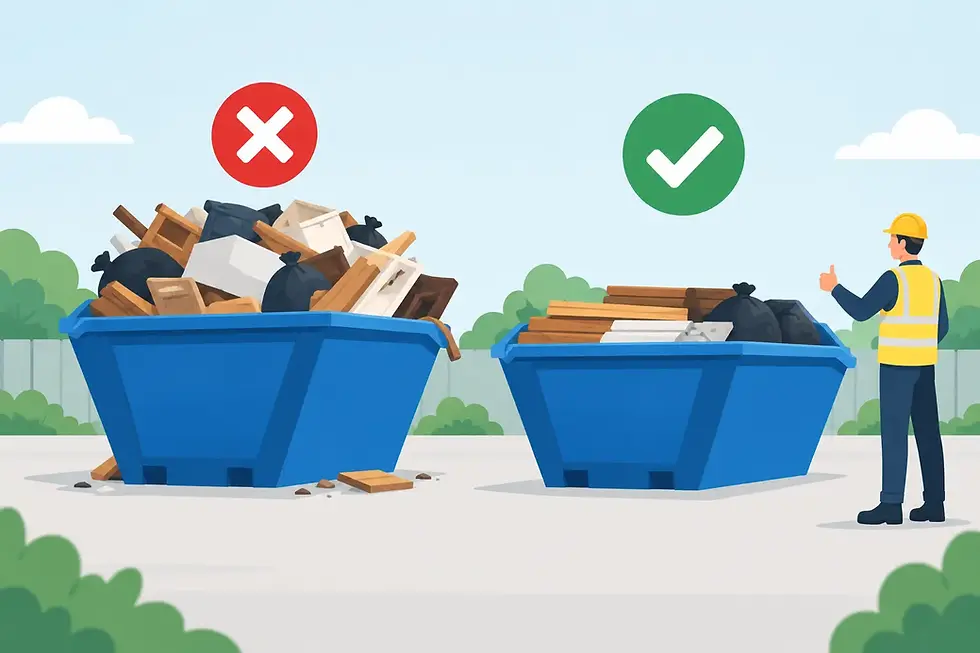
The key is selecting the right size. Compact 2-yard skips suit small clearances and garden jobs. Mid-sized skips are popular for kitchens, bathrooms and general renovations, while larger options are better for substantial property or construction waste. Avoid filling above the rim, as the load must be safe for transport.
At Skips of Manchester, customers can choose from 2-yard to 12-yard skips as well as 1-tonne skip bags, with clear pricing and support if they are unsure what their project requires. More than 97% of collected waste is recycled, helping customers deal with rubbish responsibly without adding unnecessary trips or uncertainty to the job.
A quick word on responsible disposal
Whichever option you choose, use a legitimate waste carrier and ask questions if something is unclear. Fly-tipping can begin with a cheap, informal collection that is not disposed of properly, and the person who produced the waste can still face problems if it is traced back to them.
Keep a record of your booking or collection paperwork, especially for trade and landlord work. Separate hazardous or restricted items, do not overload vehicles, and never leave waste on the pavement while waiting for someone to take it away.
The best disposal method is the one that keeps your project safe, your costs clear and your waste handled properly. If the pile is growing faster than your car can carry it, choosing the right skip size can be the simplest way to get the space back and get on with the work.


Comments