


Commercial Waste: A Practical Manchester Guide
A pile of broken plasterboard, packaging or old fittings can turn a well-run job into a bottleneck surprisingly quickly. Commercial waste is not just an end-of-project task: when it is planned properly, your team has more room to work, your site stays safer and you avoid costly last-minute runs to the recycling centre.
For Manchester businesses, trades and landlords, the best option depends on what you are throwing away, how much there is and how long the job will run. A small shop refit has different needs from a busy building site, while a one-off office clearance is not the same as regular waste from a property-maintenance round. The aim is simple: choose a collection method that keeps waste moving without paying for capacity you do not need.
What counts as commercial waste?
Commercial waste is waste produced through business activity rather than ordinary household use. That includes waste from offices, shops, cafés, rental properties, workshops, building sites, schools and managed premises. If you are a sole trader clearing up after a job, the waste from that work is generally commercial, even if you are working at a customer’s home.
Typical examples include timber offcuts, rubble, soil, green waste, cardboard, old fixtures and fittings, packaging, metal, furniture and non-hazardous mixed building waste. The material itself may look similar to household waste, but businesses have additional responsibilities around how it is stored, transported and passed on for disposal or recycling.
That does not mean the process needs to be complicated. It does mean choosing a legitimate carrier and keeping the right paperwork. A waste transfer note provides a record that your waste has been handed over correctly. For regular collections, an ongoing or annual arrangement may be suitable; for one-off clearances, make sure you know what documentation is being provided.
Start with the job, not the biggest skip
It is tempting to order the largest skip you can fit on site. Sometimes that is sensible, especially for a full refurbishment or a fast-moving construction project. More often, it means paying for unused space and making access harder than it needs to be.
Think first about the volume and type of waste. A compact 2-yard skip can suit a small commercial clear-out, light maintenance work or a modest amount of packaging and fittings. Mid-sized skips are often a practical choice for shop refits, landscaping and ongoing trade work. For larger renovation, demolition and construction jobs, a bigger skip can reduce disruption by cutting down the number of collections.
Weight matters as well as volume. Soil, bricks, concrete and rubble fill a skip quickly and become heavy far sooner than timber, cardboard or general mixed waste. If your job involves dense material, do not assume a large skip is automatically the answer. Ask for advice on the most appropriate size and waste type before booking.
Skip bags can also be useful for jobs with limited access, smaller quantities of waste or no clear space for a skip. They are particularly handy for maintenance teams and property managers dealing with jobs across several addresses. The trade-off is capacity: a bag is convenient, but it is not designed to replace a skip on a major clearance.
Keep your commercial waste easy to handle
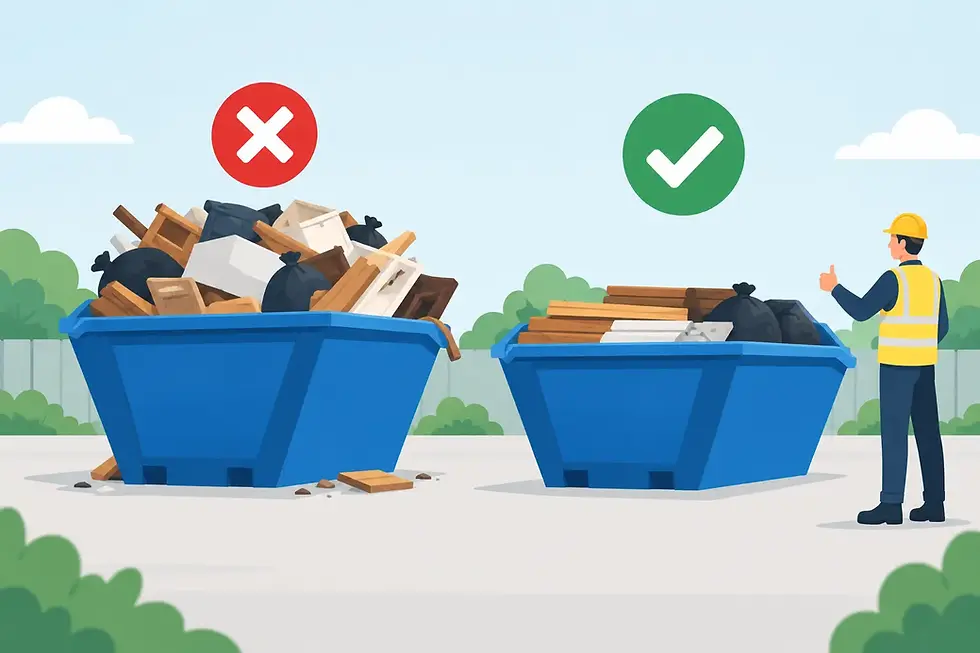
A skip works best when it is loaded sensibly. Break down bulky cardboard and flat-pack items where possible, and spread heavy materials rather than creating one concentrated load. Do not overfill above the sides. A loaded skip needs to be safe for transport on the lorry, and waste sticking out can delay collection.
Separating waste can help too. Clean cardboard, metals, timber and green waste are often easier to recycle when they are not buried beneath a mixture of other materials. On a busy site, this may mean setting aside smaller areas or containers for reusable materials and keeping the main skip for genuine waste.
There is a balance to strike. Sorting every last item is not always practical when a team is working to a deadline. But taking a few minutes to keep obvious recyclables apart can make a real difference to the amount sent for recovery rather than disposal. It also keeps the work area tidier and makes it easier to see whether a skip is being filled with the right material.
Check what cannot go in the skip
Most general commercial waste can be collected in a skip, but certain items need specialist handling. Hazardous materials and items that could cause harm, pollution or fire risk should never be added without checking first. Examples can include asbestos, paint, chemicals, gas bottles, batteries, tyres, electrical equipment, fluorescent tubes and fridges or freezers.
Plasterboard is another material worth asking about. It often needs to be kept separate from other waste so it can be handled correctly. The same applies to some soils, especially if there is any concern about contamination.
A quick check before the job starts is better than discovering an unsuitable item at collection time. Brief your staff, subcontractors or tenants on what can go in the skip and what needs putting aside. This is particularly useful on shared sites, where one incorrect item can affect the whole load.
Plan access, timing and permits early
The right skip is only useful if the delivery lorry can place it where you need it. Before booking, check gate widths, low branches, overhead cables, parked vehicles and turning space. A skip placed too far from the work area costs time, but one squeezed into a difficult location can create access problems for customers, neighbours or emergency vehicles.
Where possible, keep the skip on private land, such as a yard, driveway or designated site area. If it needs to go on a public road, you may need a permit from the local council. Permit requirements, lead times and conditions vary, so do not leave this until the day before delivery. You may also need to consider lighting, cones or other safety measures where a skip is placed on the highway.
Collection timing deserves the same attention. On a live job, an overflowing skip can slow down several trades at once. Arrange collection before it becomes a problem, especially if you are working to a handover date. For regular commercial waste, a planned schedule can be more cost-effective and far less stressful than repeated emergency bookings.
Make responsible disposal part of the job
Responsible waste management is not about making a grand gesture. It is about making sensible choices on every job: ordering an appropriate container, avoiding prohibited materials, separating what you reasonably can and using a provider that manages waste properly.
At Skips of Manchester, more than 97% of collected waste is recycled, helping customers keep useful materials in circulation wherever possible. For contractors and businesses, that means a practical service can also support the environmental standards clients increasingly expect.
There is a commercial benefit too. Clear waste arrangements help sites look organised, protect staff and reduce the risk of failed collections or unexpected charges. For landlords and property managers, they can also make turnaround work between tenancies quicker and easier to coordinate.
A simple approach for busy Manchester businesses
If you have a one-off clearance, estimate the waste honestly, check access and book a size that matches the job. If you manage regular projects, keep a record of the skip sizes and collection frequency that worked previously. Over time, this gives you a much better basis for planning costs and avoiding over-ordering.
Do not be afraid to ask questions before you book. A few details about the materials, the site and the timescale are usually enough to point you towards the right option. Good waste management should feel like one less moving part on the job, not another problem for your team to solve.
When the next pile starts building up, deal with it while it is still manageable. A well-timed collection keeps your workspace clear, your schedule moving and your customers focused on the finished result rather than the mess left behind.


Comments