


Carpet Disposal Advice for Manchester Homes
A rolled-up carpet can look harmless until it is blocking a hallway, filling a van or refusing to fit in the boot. Good carpet disposal advice starts with a simple question: is the carpet genuinely at the end of its life, or is there a better route than throwing it away? The answer affects your cost, the space you need and how much material can be kept out of landfill.
Whether you are replacing flooring in one room, clearing a rental property or stripping out a full house before renovation, planning the disposal before the fitter arrives saves a last-minute headache.
Carpet Disposal Advice Before You Remove It
First, assess the condition of the carpet honestly. A clean, dry carpet with limited wear may be suitable for reuse, particularly if it has come from a spare room, office or lightly used property. Charities, community projects, animal shelters and local reuse groups may sometimes accept usable offcuts or full rolls, but always check what they can take before loading the car. Many organisations cannot accept carpet that is stained, heavily worn, damp or carrying pet odours.
If the carpet is beyond reuse, recycling may still be possible. Some specialist facilities separate materials such as fibres, backing and underlay, but acceptance rules vary. Carpet is not normally suitable for your household recycling bin, and taking it to a recycling centre without checking first can mean a wasted journey. Ask your local site or waste provider whether they accept carpet, underlay and gripper rods separately.
The practical option for a larger refit is often a skip. Carpet takes up more room than people expect because it cannot be compacted easily when rolled. If you are also disposing of underlay, old laminate, packaging, timber, bathroom fittings or general renovation waste, putting everything into one appropriately sized skip is usually more convenient than several trips to the tip.
Remove Carpet Safely and Keep Materials Separate
Clear the room before you start. Furniture, doors that are being replaced and loose fittings should be removed so you have a clear route from the room to the skip or collection point. Wear gloves, sturdy footwear and long sleeves. The sharpest hazards are often hidden beneath the carpet: gripper rods, staples, nails and worn threshold strips can all catch hands and damage bin bags.
Start at a corner and pull the carpet away from the gripper rod. It is usually easier to fold or cut it into manageable strips rather than attempting to carry one huge roll through the house. Use a sharp utility knife carefully, cutting away from yourself and protecting the floor beneath where possible. If you are lifting carpet from stairs, work steadily and keep the route below clear.
Underlay should be lifted separately. Foam, felt, rubber and fibre underlay may have different disposal or recycling options, so keeping it apart gives you more flexibility. Roll or bag it where practical, especially if it is crumbly. Gripper rods and metal threshold strips should be kept together and handled with care. They can go in mixed construction waste in many cases, but they should not be left loose where somebody could be injured.
Do not assume that every old flooring material is straightforward. If you uncover suspect tiles, adhesive, insulation or other materials that could contain asbestos, stop work and seek professional advice. A standard skip is not the place for hazardous waste. The same applies to paint, solvents, gas bottles, batteries, electrical items and chemicals.
Choosing a Skip for Old Carpet
The right skip size depends less on the number of rooms and more on what else is being removed. Carpet from a small bedroom alone may not justify a large skip, especially if it can be cut down and taken to an approved recycling centre. But a property clearance or renovation can quickly create a mixed pile of bulky waste.
For a small flooring job, a compact 2-yard skip or a 1-ton skip bag can suit light waste and smaller amounts of carpet. If you are replacing carpet across several rooms and adding underlay, packaging and furniture, a 4-yard or 6-yard skip is often a more comfortable choice. Larger renovations, landlord clearances and trade strip-outs may call for an 8-yard or 12-yard skip.
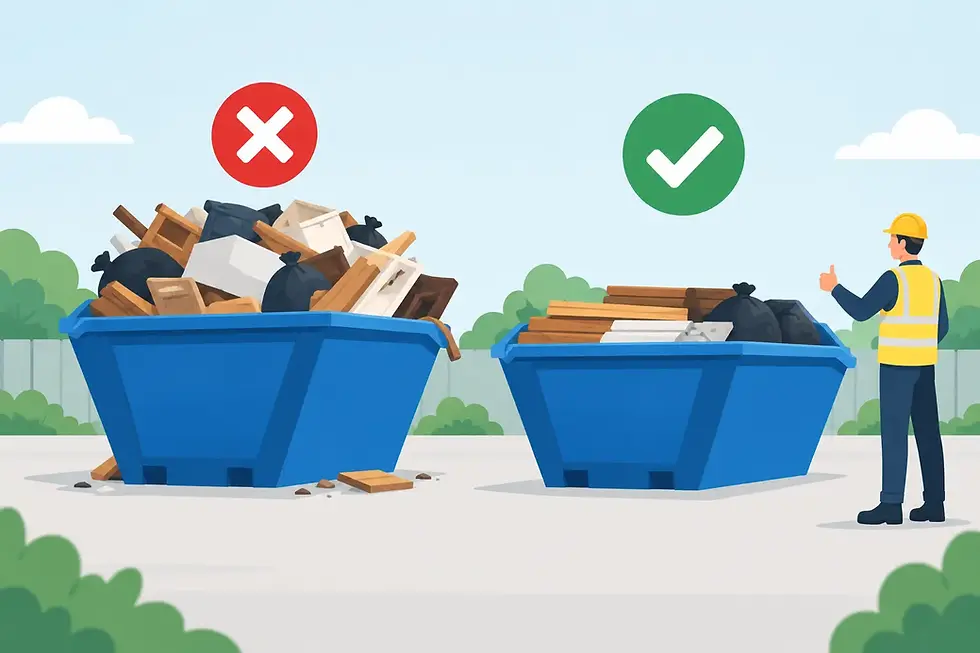
It pays to allow a little breathing room. Carpet rolls tend to bridge across a skip rather than settling neatly into the corners, particularly if they are long. Cut rolls into shorter lengths where safe to do so, then load them first and place denser materials around them. Never overfill above the rim. A loaded skip must be safely sheeted and transported, so waste sticking out can delay collection or require you to remove items.
Skips of Manchester offers sizes from 2 to 12 yards, as well as skip bags, so you can match the service to the job rather than paying for capacity you will not use. If you are uncertain, describe the rooms and the other waste you have to dispose of when booking. It is far easier to choose the right size at the start than arrange a second collection halfway through the job.
Where Will the Skip Sit?
A driveway is usually the simplest location. It keeps the skip close to the property and avoids the need for a highway permit. Make sure there is clear access for the delivery lorry, no low branches or overhead cables, and enough width for the vehicle to manoeuvre safely.
If the skip needs to go on a public road, a permit may be required from the relevant council. Requirements and lead times differ across Greater Manchester, so do not leave this until the day before your carpet is due to be removed. Your skip provider can advise on the process and whether road placement is suitable.
Avoid These Common Carpet Disposal Mistakes
The biggest mistake is treating carpet as ordinary household rubbish. Trying to force a full room's worth into a wheelie bin is unlikely to work and may result in it being left behind. Fly-tipping is never a solution. Aside from the environmental damage, it can lead to serious penalties and puts the clean-up cost back on local communities.
Another common issue is hiring too small a skip based on floor area alone. A carpeted bedroom may seem modest, but rolled carpet, thick underlay and old fittings create awkward volume. Measure each room, consider the number of layers being lifted and include any associated waste from the refit.
Finally, avoid putting restricted waste into the skip because it is convenient. Hazardous materials require separate handling. Mixing them into a general load can create safety problems, add charges and prevent recoverable waste from being recycled.
Make the Most Responsible Choice
There is no single best route for every old carpet. A nearly new carpet may deserve a second life. A clean, separated material may be accepted for recycling. A worn, mixed load from a refurbishment is often best handled in a skip by a provider that sorts and recycles as much as possible.
Think about the whole job, not just the roll of carpet at your feet. Plan where it will be stored, how it will be moved, what other waste is coming out of the property and whether you need a permit. With those details sorted, replacing tired flooring becomes a satisfying step towards a cleaner, more useful room rather than a disposal problem left on the doorstep.


Comments